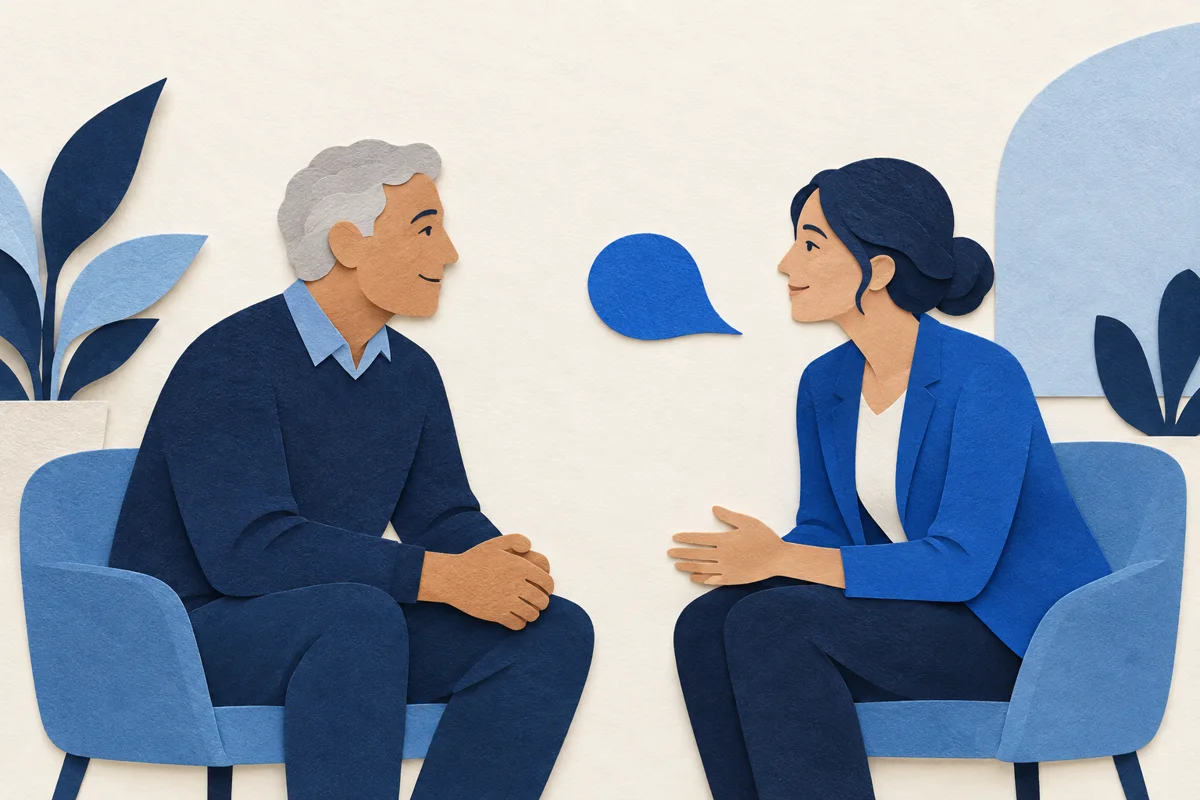
"Educating" your patient can come across as pushy or salesy. We unintentionally push our own agenda and make assumptions about their perspective. Lead with curiosity and guide them to their own conclusions instead. When a patient says "I don't think I'm old enough for hearing aids"... Don't say: "Well the good news is hearing aids are practically invisible today. Plus, we have patients of all ages!"
That feels like:
You're disregarding their feelings
You're making assumptions about their true concerns
You're persuading them towards YOUR desired outcome
Instead, ask questions or reflect back what you're hearing. Like this: "It sounds like on one hand you know there's something going on, but on the other you have some internal hangups about addressing it?" Then stop talking and let them reflect and reply. This allows them to:
Examine their own beliefs
Expand and clarify their feelings and objections
Come to their own conclusions.
You'd be surprised how often the response is: "I know I'll just have to get over it. Hopefully you have something that will blend with my hair?" Don't assume. Don't persuade. Don't even "educate". People are much more likely to take action when we feel like we've come to our own conclusions about what we need to do.